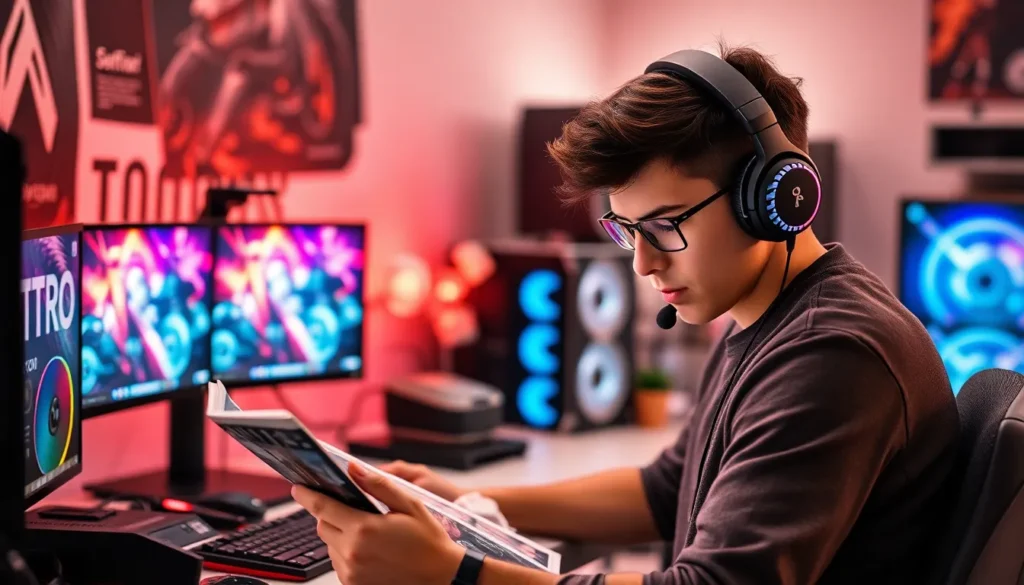
Every gamer knows the thrill of diving into a new title, but what happens when your trusty gaming PC starts to lag behind? It’s like trying to run a marathon in flip-flops—frustrating and not very effective. Upgrading your rig can feel daunting, but it’s essential for keeping up with the latest games and ensuring a seamless experience.
Understanding Your Gaming Needs
Evaluating gaming needs involves understanding performance levels and budget constraints. Gamers should consider how well their current setup runs the latest titles.
Assessing Game Performance
Monitoring frame rates, load times, and resolution greatly impacts the gaming experience. Frame rates under 60 FPS may signal a need for an upgrade. Stuttering or lag can diminish enjoyment in competitive games. When recent titles struggle to run smoothly, it’s time to assess hardware requirements, such as the graphics card and CPU. Identifying bottlenecks through benchmarking tools reveals weak points in performance. A detailed analysis allows for focused upgrades that significantly enhance gameplay.
Budget Considerations
Planning a budget ensures the right upgrades without overspending. It’s essential to prioritize components based on performance needs. Allocate funds to the graphics card, as it directly influences visual quality and frame rates. Understanding pricing trends helps in identifying good deals. Researching alternative parts may uncover more affordable options without sacrificing performance. Balancing costs with expected gains emphasizes the importance of well-thought-out upgrades. Setting clear limits assists in achieving the best value for each component.
Signs It’s Time to Upgrade
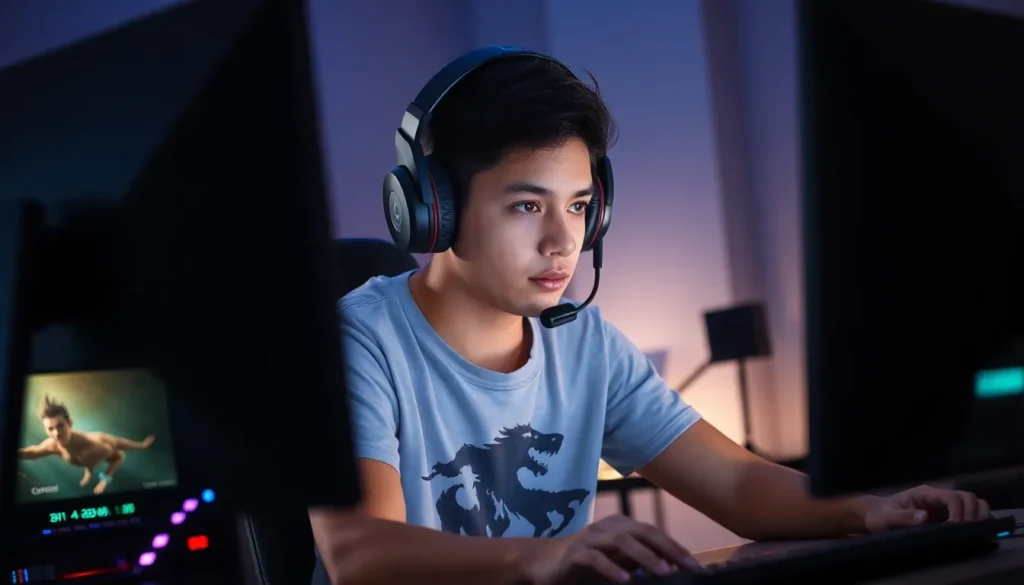
Recognizing when to upgrade a gaming PC is crucial for maintaining an enjoyable experience. Several indicators suggest the timing is right for an upgrade.
Slow Performance in Current Games
Experiencing lag during gameplay often signals the need for an upgrade. Frame rates dropping below 60 FPS can lead to choppy visuals, making it difficult to engage with fast-paced titles. Long load times detract from immersion, impacting overall enjoyment. Stuttering graphics during cinematic moments disrupt gameplay flow. Gamers might notice these issues worsen with new releases, which can demand more from hardware. Maintaining a competitive edge requires an optimal setup. Regularly checking performance metrics helps identify slowdowns that need attention.
Incompatibility with New Titles
New game releases frequently push hardware limits, making compatibility a key factor. Attempting to run the latest AAA games on outdated systems often results in decreased performance or crashes. Many games now require specific graphics processing capabilities, which older graphics cards may lack. Missing features like ray tracing means gamers miss out on cutting-edge graphics. When settings need to be turned down significantly to maintain playability, it’s a clear sign to consider an upgrade. Compatibility with future releases becomes increasingly important for dedicated gamers. Investing in compatible components ensures enjoying the latest developments in gaming technology.
Key Components to Consider Upgrading
Upgrading crucial components significantly enhances gaming performance. Gamers should focus on the graphics card, processor, and memory.
Graphics Card Upgrades
An outdated graphics card often leads to performance bottlenecks. Frame rates below 60 FPS, reduced visual quality, and poor resolution indicate a need. Current AAA titles typically demand high-end graphics cards for optimal gameplay. It’s important to prioritize cards that support the latest technologies, like ray tracing. Gamers should consider options like NVIDIA’s RTX series or AMD’s RX lineup to improve visual fidelity. Timing the upgrade during promotional periods may yield better pricing.
Processor Enhancements
Processors play a vital role in overall gaming performance. Slow processing speeds can restrict frame rates and cause bottlenecks. Monitoring CPU usage during gameplay can reveal if an upgrade is necessary. Contemporary games require multi-core processors for smooth performance. Upgrading to a newer model enhances multitasking abilities and can improve streaming quality alongside gaming. Prioritize processors with higher clock speeds and core counts for noticeable improvements.
Memory and Storage Options
Memory affects loading times and overall system responsiveness. When gaming, 16 GB RAM is typically the standard for smooth performance; any less may lead to stuttering. Upgrading RAM can maximize gaming performance and reduce lag. Storage solutions also require attention, as SSDs significantly decrease load times compared to traditional hard drives. Gamers should prioritize NVMe SSDs for faster data transfer rates. Investing in faster and larger storage transforms the gaming experience.
Planning Your Upgrade Strategy
Assessing an upgrade strategy requires careful consideration of multiple factors. Gamers should prioritize compatibility and budget to ensure a successful enhancement of their gaming rigs.
Researching Compatibility
Confirming component compatibility is critical before making any upgrades. A motherboard supports specific processors and graphics cards. Using online tools, he can check compatibility across various brands and models. Reading user reviews offers additional insight into real-world performance and compatibility. When considering a graphics card upgrade, ensuring that the power supply can handle the new component’s requirements is essential. Compatibility lists provided by manufacturers help clarify supported hardware combinations. Taking the time to verify these components prevents costly errors and wasted resources.
Setting a Realistic Budget
Establishing a clear budget helps avoid overspending while upgrading a gaming PC. Gamers should assess the costs of high-priority components first. A high-end graphics card often commands the largest portion of the budget, so focusing on this can yield the most significant performance gains. Allocating funds for additional components, such as RAM or storage, follows this initial investment. Researching prices helps identify the best deals, enabling him to stretch his budget further. Setting aside an emergency fund for unexpected expenses during installation ensures a smoother renovation process. Prioritizing these factors leads to a balanced and efficient upgrade strategy.
Conclusion
Upgrading a gaming PC is essential for maintaining an enjoyable and immersive gaming experience. Gamers should keep an eye on performance indicators like frame rates and load times to determine when it’s time to make a change. By prioritizing key components such as the graphics card and processor, they can enhance their rig’s capabilities without breaking the bank.
Planning and researching are crucial steps in this process. Understanding compatibility and budgeting effectively ensures that upgrades are both efficient and cost-effective. With the right approach, gamers can stay ahead of the curve and fully enjoy the latest titles in stunning detail and smooth performance.